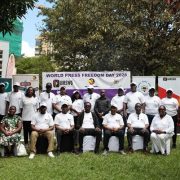
Uganda commemorates World Press Freedom Day 2026

Uganda honored World Press Freedom Day 2026 at the Uganda Broadcasting Corporation (UBC) grounds. The event was organized by Uganda Media Sector Working Group (UMSWG), a multi-stakeholder platform launched in March 2021, with its partners including the Media Council of Uganda, Uganda Human Rights Commission (UHRC), National Broadcasters Association, Uganda Editors’ Guild, and various media owners.

The commemoration commenced with a symbolic walk led by Hon. Kabyanga Godfrey Baluku, State Minister for National Guidance at the Ministry of ICT and National Guidance. His remarks framed the day’s discussions around both the gains made and the responsibilities that come with a vibrant media sector.
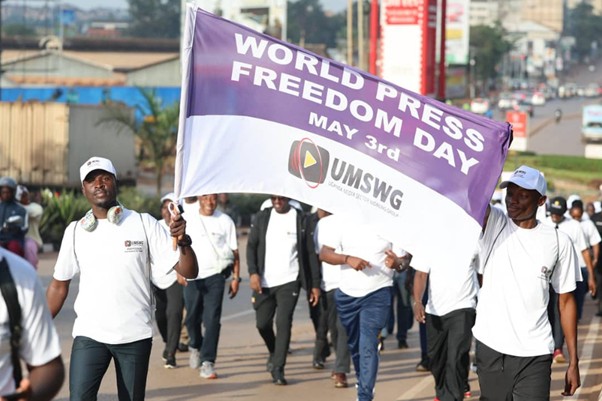
  The Media fraternity symbolic walk for commemoration of Press Freedom.  

The fundamental concept throughout the event was: a free press is deeply connected to national stability, transparency, and progress rather than standing alone as an abstract principle. This was well aligned with the global theme, “Shaping a Future at Peace,” alongside Uganda’s national focus on promoting press freedom as a pillar for human rights, development, and security.

Uganda currently hosts an estimate of 315 radio stations, more than 60 television channels, over 50 print, 70 plus online platforms and an increasingly influential digital space. With internet access reaching a significant portion of the population of over 30 million people, the flow of information is no longer confined to traditional structures but shaped by a diversity of voices. Social media platforms, in particular, have transformed how information is shared, enabling real-time public engagement and widening participation in national discourse.

“We’re not about to suppress Media freedoms.” said Hon. Kabyanga, addressing the participants, dismissing concerns about suppression. However, he underscored the need for professionalism, urging journalists to avoid inflammatory content, verify facts, and present balanced reporting. His message highlighted a key principle: the credibility of the media depends on how responsibly its freedoms are exercised.
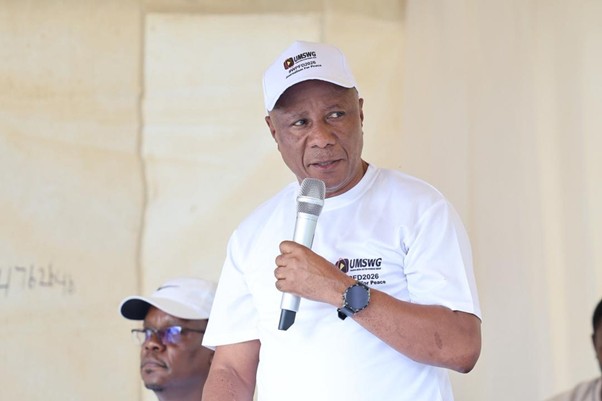
 Hon. Godfrey Kabyanga Baluku, State Minister for National Guidance speaking to the attendees. 

A cautionary note came from Paulo Ekochu, Chairperson of the Media Council of Uganda stressing that freedom without responsibility weakens the integrity of the profession, while responsibility without freedom limits.
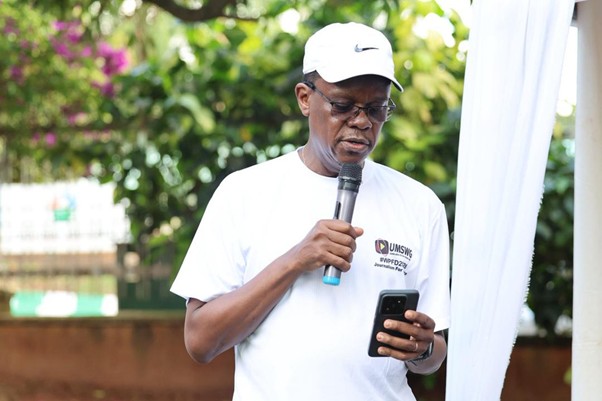
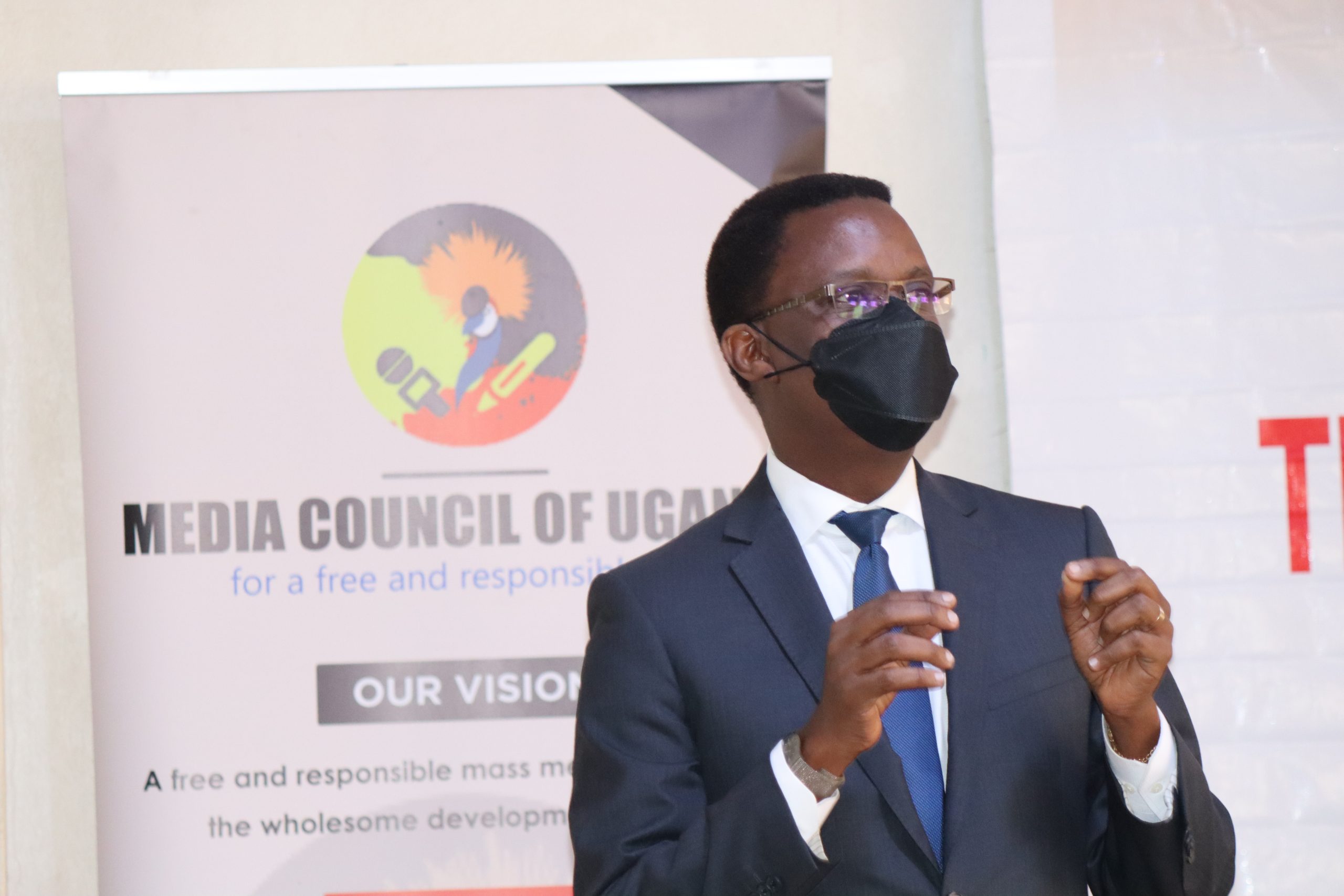
Paulo Ekochu, Chairperson Media Council of Uganda addressing the participants. 

The celebration also paid tribute to distinguished journalists through the Lifetime Achievement Award. Sheila Kawamara Mishambi was recognized for her coverage of the 1990-1994 Rwanda conflict and genocide, while John Muto Ono P’Lajur was acknowledged for his reporting on the Northern Uganda conflict from 1986 to 2006. Their contributions reflect the courage and dedication required to document complex and often dangerous events during periods of crisis.
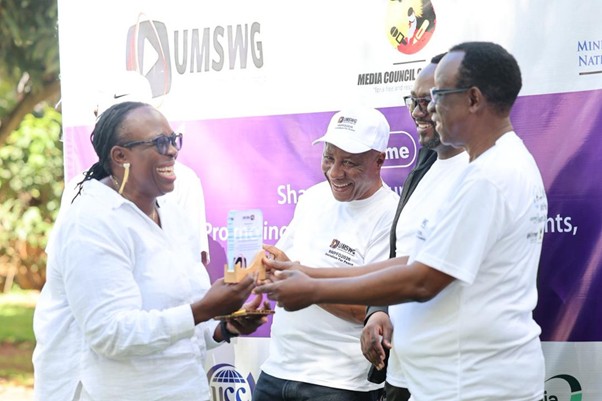
Sheila Kawamara receiving her award.

Discussions also tapped into the growing role of artificial intelligence in journalism. While these technologies offer efficiency and innovation, they bring risks such as misinformation, deepfakes, and potential erosion of public trust. The consensus was clear: technological tools should enhance journalistic work, but human judgment must remain central.

As the commemoration concluded, the overarching message was evident. Uganda’s media sector is not only dynamic but also influential in shaping public opinion and national dialogue. Safeguarding its independence while strengthening ethical standards is essential to ensuring it continues to serve society effectively.


The writer; Ms. Shamirah Matovu is a member of The Media Council of Uganda.
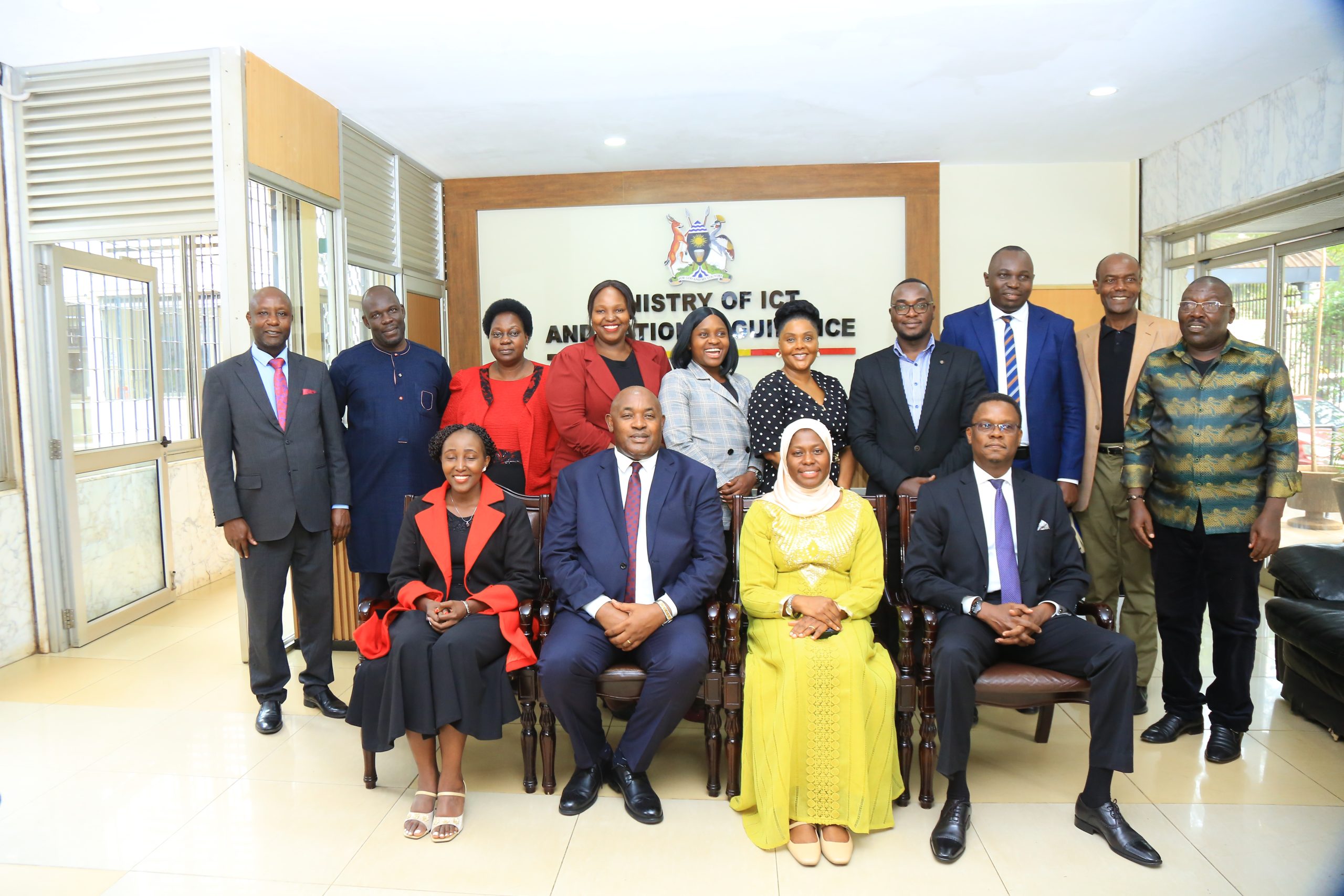
New Council was officially sworn in at the Ministry of ICT & National Guidance.

On Friday, October 17, 2025, a vibrant new Council was officially sworn in at the Ministry of ICT & National Guidance. A well-balanced team with diverse intellect, gender, and professional experience.
With renewed energy and vision, the Council is set to steer Uganda’s media sector toward greater ethics, innovation, and inclusivity.


WORLD PRERSS FREEDOM DAY 2022

The special day celebrates the spirit of Journalism and recognizes the dedication of journalists

Hailed as the fourth pillar of democracy, journalists have time and again risked their lives and reputation to reveal the truth behind an incident, event or scandal.

In a bid to appreciate their hard work, every year, May 3rd is observed as World Press Freedom Day. The special day celebrates the spirit of journalism and recognises the dedication of journalists. It is extremely significant as the United Nations considers it an opportunity to celebrate the fundamental principles of press freedom, assess the state of the press freedom across the globe, defend the attacks on media independence and pay tribute to journalists who sacrificed their lives in the line of duty.

Theme

Every year a specific theme is chosen for World Press Day and this year’s theme is “Journalism under digital siege”. The theme not only highlights the ways that endanger journalism but also the consequences of all this public trust over digital communications. Mostly it focuses on the risks faced by journalists by surveillance and digitally-mediated attacks. The origin of World Press Day dates back to 1991, when an African journalist present at a UNESCO conference in Windhoek, which was based on ‘Promoting an independent Pluralistic African Media’, opened up about an idea to encourage press freedom in different parts of the world.

History

UNESCO adopted the Windhoek declaration on May 3rd, 1991, which aimed toward the development of a free, independent, and pluralistic press. The day also highlights the importance of freedom of journalists in a few countries like China, North Korea, Vietnam, Laos, Eritrea, Djibouti, Turkmenistan, Saudi Arabia, Syria, Iran, and Cuba that have severely limited press freedom. Last year’s theme was “Information as a public good”, which focused on the importance of cherishing the information as a public good and exploring the ways to strengthen the fourth pillar of democracy.

KEY MESSAGE BY UNESCO

The theme of 2022 World Press Freedom Day, “Journalism under Digital Siege”, underlines the many new digital threats journalists are faced with, and demands responses from all concerned stakeholders.

Social media platforms should increase transparency about any actions to stop the spread of disinformation and promote trustworthy information instead.

Human rights-based governance is needed to ensure that internet companies do more to tackle disinformation, online hate speech, and potentially harmful content. This must be consistent with international standards on freedom of expression, access to information, and the safety of journalists.

Privacy standards must be strengthened in regard to threats to the right to privacy by digital technologies and practices such as data retention, artificial intelligence, spyware, and arbitrary surveillance.

Legal actions are needed to prevent and prosecute illegal surveillance of journalists, both by public and private parties, while there should be strengthened legal protection for journalists to keep their sources confidential.

Platforms and police services must take strong steps to prevent and eliminate online attacks against journalists, and orchestrated campaigns of harassment, intimidation, and violations of privacy.

Intensified measures need to be taken to protect women journalists, who are especially violently targeted online and offline, such as by increasing responsiveness to their situation and developing tools to identify and fight online violence.

Of immediate concern is the economic viability of media, as many outlets continue to bleed advertising revenues to Internet companies, resulting in news deserts and existential threats to media pluralism and independence.

The Member States, Internet intermediaries, and civil society all have a role to play to break the digital siege on journalism and find multi-stakeholder solutions to the challenges.

World Press Freedom Day 2022 is an opportunity to put into action the commitments made by all UNESCO member states as regard to the principles of the Windhoek +30 Declaration. The Windhoek +30 Declaration continues to be relevant in regard to its recognition that press freedom, independence, and pluralism are prerequisites to guarantee information as a public good that serves as a shared resource for the whole of humanity.

Now media viability, transparency of digital platforms, and citizens empowered with media and information literacy have been added to the core tasks.


Journalists asked to meet challenges of modern media practices

KABALE– The Chairman of the Media Council of Uganda Paulo Ekochu has underscored the importance of having vibrant and professional media practitioners in order for them to meet the challenges of modern technological needs in the media industry.

Ekochu made this revelation while addressing the journalists who were attending a 2-day media engagement meeting at Kirigime Guest House in  Kabale Municipality organized by the Media Council of Uganda under the theme, ” The drive for a responsible media in Uganda”.

He said that the Media Council of Uganda established by Section 8(i) of the Press and Journalists Act has the mandate to promote a free, responsible press and regulate the mass media in Uganda.

He reminded the participants that Uganda is the only country in Africa that has allowed freedom of speech to thrive but this has given loopholes for some people to go against established guidelines to promote free media practices.

The Chairman of the Media Council of Uganda Paulo Ekochu addressed the journalists

He however said that there are many challenges that have emerged with technological advancement which the media practitioners must come into terms with in order to be able to deliver accurate information to the masses.

The Secretary of Media Council of Uganda David Kyetume Kasanga told the journalists that the media practitioners need to do their work within the confines of the established laws thus calling upon the media owners and managers to ensure that they understand the legal framework of their operations in order to operate without hindrance.

Kyetume enumerated several legal framework procedures that media owners and practitioners must follow, such as registration of their media houses and acquisitions of an operational permit all of which are in accordance with the established laws.

Trainers who included JB Wasswa from Makerere University said that Uganda’s media will thrive if the practitioners practice their work professionally without reporting issues that mislead the general public.

Other trainers included Charles Odoobo Bichachi, the Public Editor of Nation Media Group who asked journalists to account for their work and what they feed the general public, while a member of the Media Council of Uganda Peter Okello Jabweri told the journalists to practice journalism based on professional training.

Others included Gerald Businge from Ultimate Media Consults who took the journalists through digital media practices and asked them to always distinguish between factual from fake news.

Richard Mugwisagye, from the Uganda Police Force, asked the media practitioners to follow established laws when practicing their work to avoid confrontation with security forces while the head of Legal Services in Uganda Communications Commission Abdul Sallawu Waiswa asked journalists to do their work within the confines of the law.

The training which attracted participants from Kisoro, Rubanda, Rukiga, Kabale, Rukungiri, and Kanungu will come to climax on Thursday afternoon after an award of certificates to over 100 journalists from both print and electronic media.


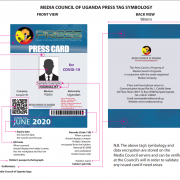
Media Council Uganda Press Tag Symbology

As you are aware, Government recognises the media as rendering an essential service of informing, sensitising and educating the public on the COVID-19 pandemic.
The Media Council of Uganda yesterday started issuing press tags to journalists whose editors sent in their particulars as earlier requested. The tag is to be used for identification purposes during coverage of COVID-19 in the field. However, it is not required during the joint daily security briefings at the Uganda Media Centre. Attached is the sample tag with its features explained.


This is to request the print and digital media to carry it on their platforms and TV stations to display it to the public. You are also requested to forward it to your other platforms, including WhatsApp, Twitter and Facebook. The purpose is to guard against forgery of the press tag and to minimise interruptions of journalists by security personnel.

For any enquiry or clarification, please, call Mr Paulo Ekochu, Chairman of the Media Council of Uganda on 0772 711711 or 0700711711 E-mail: [email protected] or the Secretary to the Media Council, Mr Kyetume Kasanga on 0772 516456 E-Mail: [email protected] and dkkasanga10@gmailcom.