

Co-regulation takes centre stage at consultative meet.
CO-REGULATION TAKES CENTRE STAGE AT CONSULTATIVE MEET
By Hillary Turyasingura
The need for a co-regulation of the media has dominated the consultative engagement on reforms of select media laws and practice in Uganda.
The consultative engagement organised by the Ministry of Information, Communications Technology and National Guidance, in conjunction with the Media Council of Uganda, was held on Thursday 28th November 2019 at Mestil Hotel in Kampala.
Journalists, members of the Media Council, Ministry of ICT and National Guidance, representatives from the United Nations Development Programme, the academia and other stakeholders attended the one-day meeting.
Professor Monicah Chibita, dean of the Faculty of Journalism and Communication at Uganda Christian University, who gave the Keynote Speech, stressed that amidst individualisation, freedom of speech and of expression as well as media freedom must be exercised rightly. She, therefore, called for the need to regulate the media in order for the public interest to be known without violating the rights of citizens.
Participants observed that the media in Uganda had not reached a level of self-regulation. They highlighted that there was need for all stakeholders to join efforts and make laws which will address the tremendous change from traditional to new media.
The Commissioner for Information Dissemination and Communication in the Ministry of ICT and National Guidance, Moses Watasa observed that the media was doing a great job in the country. However, he noted that everyone had become a journalist, heralding the need for statutory regulation.
This, he said, was a result of new technologies in the media space and many mistakes which called for co-regulation of the media. He explained that in some professions such as Medicine and Law self-regulation is made a necessity by the nature of what they do.
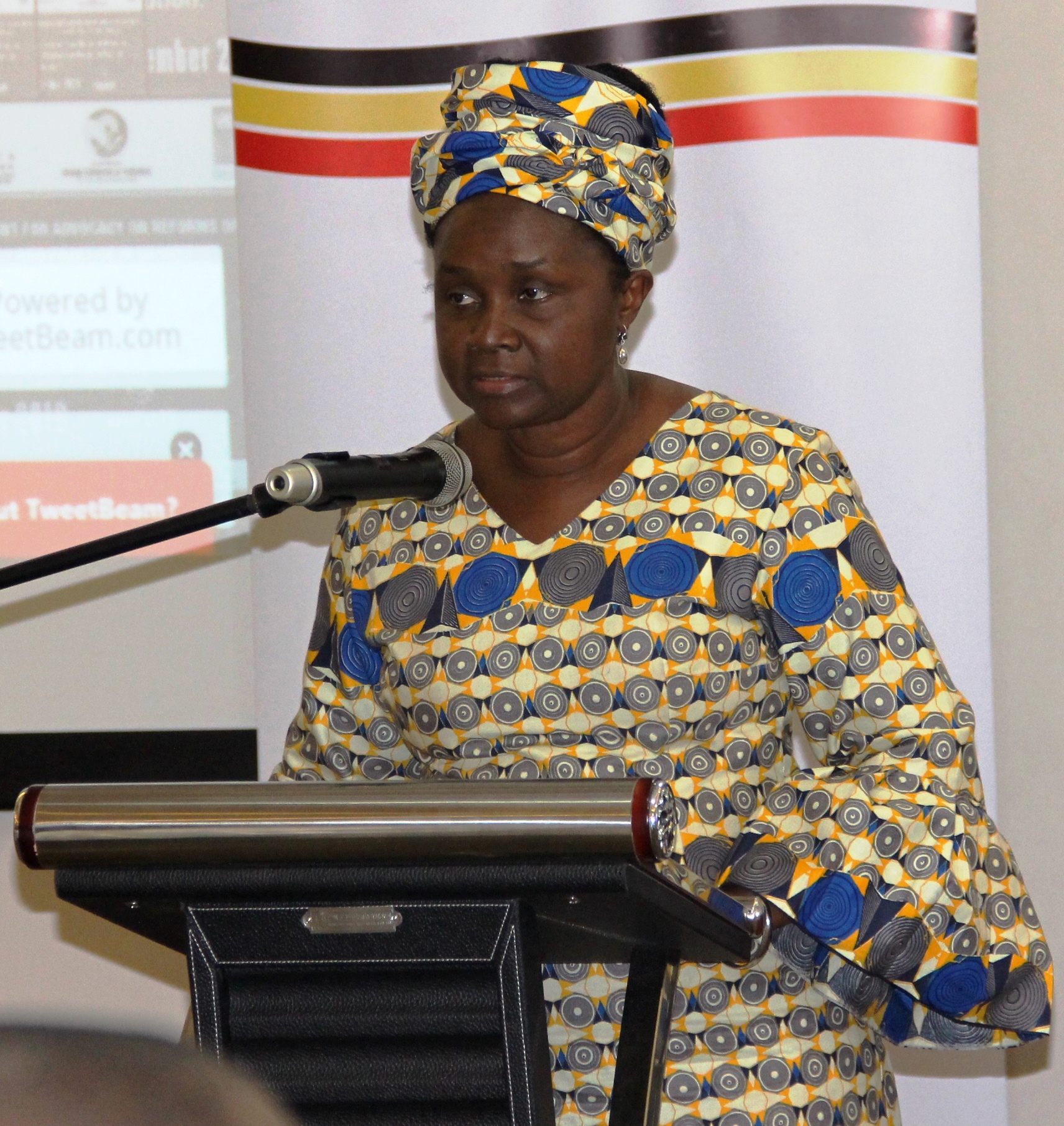
Annet Mpabulungi Wakabi, UNDP’s team leader on the Rule of Law and Constitutional Democracy Programme
The need for co-regulation was supported by the Media Council Chairperson, Paul Ekochu who was among the key speakers of the day. Panellists Dr Emily Maractho, a lecturer at Uganda Christian University, Peter Okello Jabweli, a member of the Media Council, and Giles Muhame, managing director of an online news site Chimpreports, among others, all called for co-regulation.
Annet Mpabulungi Wakabi, UNDP’s team leader on the Rule of Law and Constitutional Democracy Programme, represented the UNDP Resident Representative in Uganda, Elsie Attafuah. She also supported the co-regulation idea, noting that Uganda had over 18 million internet subscribers, with 14 million subscribers on mobile telephony. She said they could not be ignored.
The new Secretary to the Media Council who doubles as a Principal Information Officer in the Ministry of ICT and National Guidance, Kyetume Kasanga reminded participants that Government was committed to providing free access to public information. For that matter, he noted, Parliament had enacted the Access to Information Act as the enabling law.
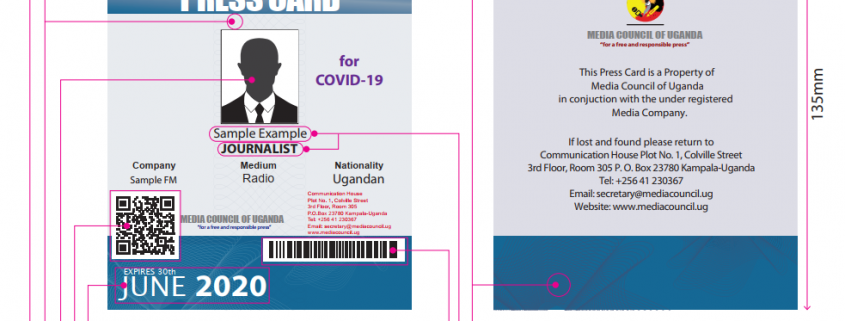
Media Council Uganda Press Tag Symbology

For any enquiry or clarification, please, call Mr Paulo Ekochu, Chairman of the Media Council of Uganda on 0772 711711 or 0700711711 E-mail: [email protected] or the Secretary to the Media Council, Mr Kyetume Kasanga on 0772 516456 E-Mail: [email protected] and dkkasanga10@gmailcom.
Media Council on film Classification to promote the Industry
The Media Council continues to regulate the content of the film industry by setting up a film Classification Secretariat in Communication house 3rd Floor Colville Street in Kampala.
The Council worked with Uganda Communications Commission (UCC) after it entered into a partnership to jointly regulate the film industry in the country.
The two institutions both have functions related to managing the film industry but have previously worked independent of each other. However, a memorandum of understanding for one year 2013 -2014 was signed to provide for the shared responsibility and resources to help streamline and develop the film and video industry in the country.
UCC provided office space on its premises on Communication House to accommodate the staff of Media Council responsible for film classification. The staff is expected to classify and censor films and videos to establish their appropriateness for audience viewing before they are showed to the public.
This move is intended to help promote development of the film industry and also protect the public from viewing undesirable content shown in places such as cinema and video halls scattered across the country.
Media Council, through the Press and Journalist Act CAP 105 is mandated to censor films, videotapes, plays and other related materials meant for public consumption.
Meanwhile the Uganda Communications Act 2013 allows UCC to license cinematography theatre, video and film libraries.